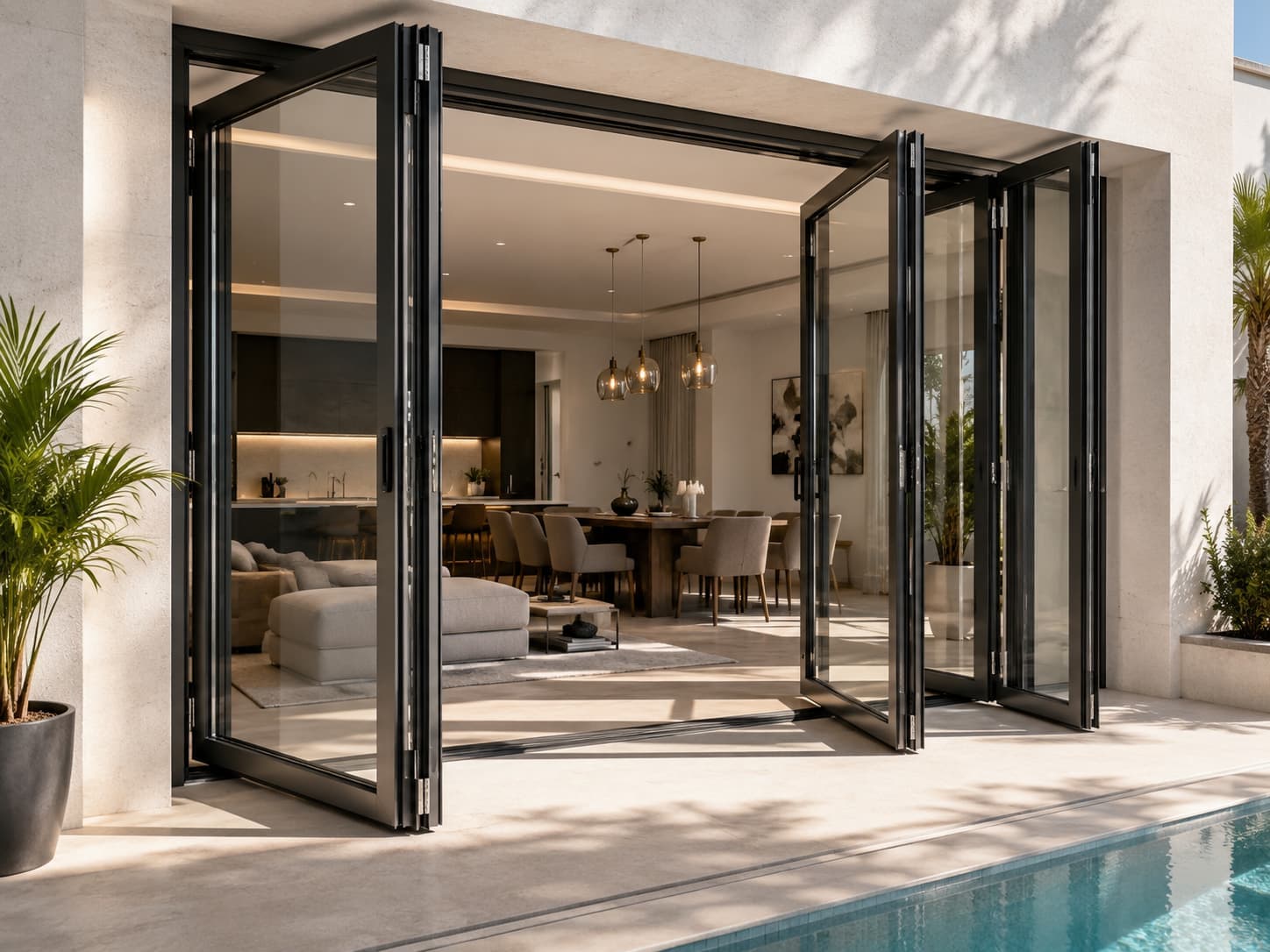
Bi-Fold Doors
High-performance aluminium folding doors that open entire wall spans for panoramic living.
View Details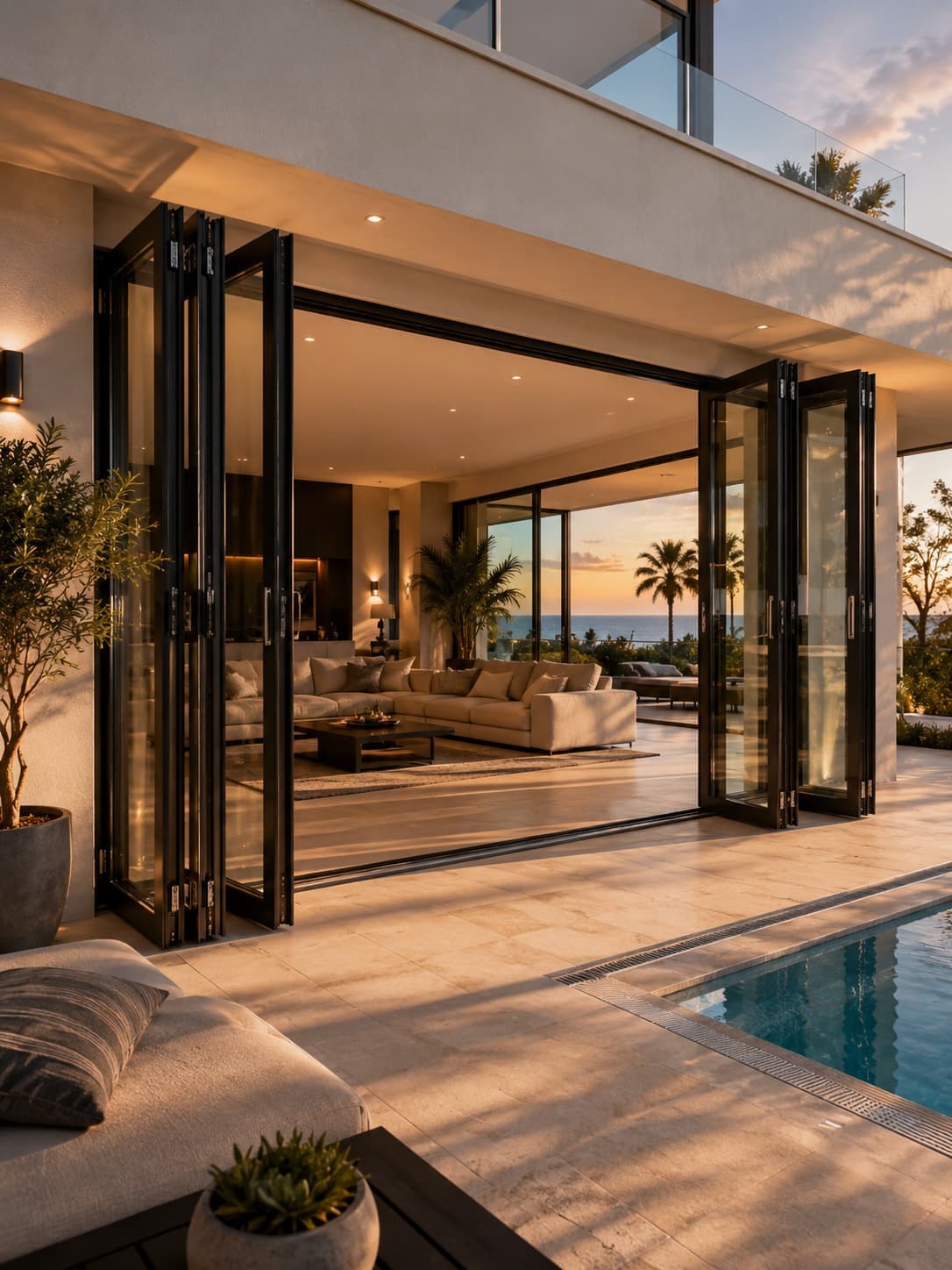
Guide
Sliding doors suit wide openings where you want the glazed panel to stay visible even when open, and are typically simpler and more cost-effective. Bi-fold doors suit openings where you want the entire space to fold completely open, maximising indoor-outdoor flow — at a higher cost and with more hardware to maintain.
Both systems open up a wall of glass, but they do it differently — and the right choice depends on how you actually want the space to behave, not just how it looks in a brochure photo.
A sliding door runs one or more large glazed panels along a track, with at least one panel staying fixed in place. Even fully open, part of the glazed wall remains a visible panel rather than disappearing.
A bi-fold door is made of several narrower panels hinged together that concertina back to one side of the opening, so the entire width can become a genuinely open gap — no fixed panel in the way.
Sliding systems are generally the better fit for standard terrace and patio access where you want a large glazed opening most of the time, with the option to fully open it occasionally. They have fewer moving parts than a bi-fold, which usually means less to maintain over time.
Lift-and-slide systems in particular handle very large, heavy glazed panels well, making them a strong option for sea-view apartments where you want maximum uninterrupted glass when closed.
Bi-folds are the better choice when the goal is a completely open wall — for example, connecting an indoor living or dining area directly to a terrace or pool deck for entertaining. Nothing is fixed in place; the whole width becomes walkable.
The trade-off is more hinges and rollers per opening, which means more hardware to keep properly adjusted over the years, and typically a higher cost than an equivalent sliding system.
Beyond the basic mechanism, a few things tend to decide it in practice:
Common Questions
Direct answers to what people usually ask alongside "Bi-Fold vs Sliding Doors in Malta: Which Suits Your Space?".
Related Products
High-performance aluminium folding doors that open entire wall spans for panoramic living.
View Details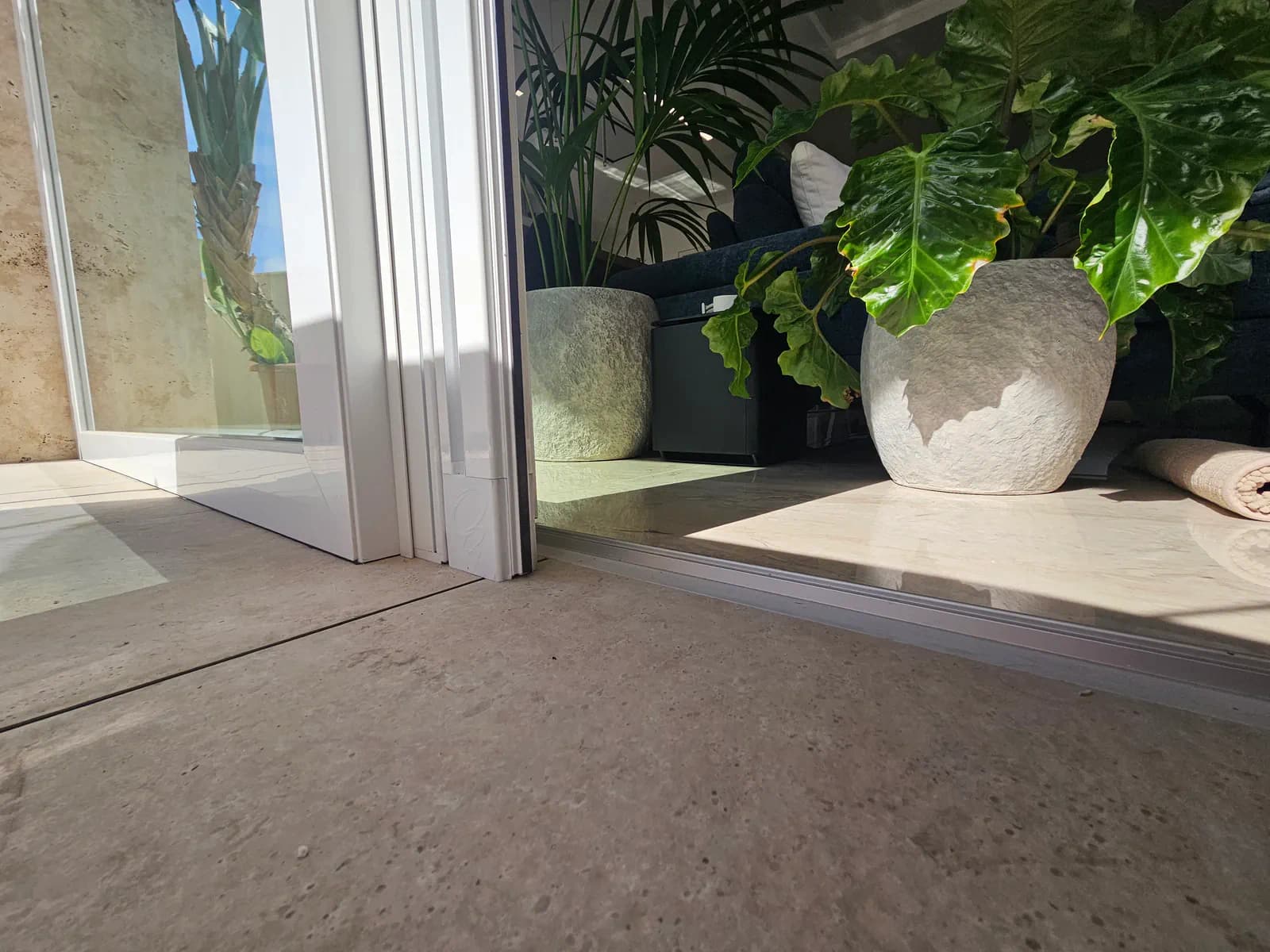
Smooth-gliding, large-format aluminium sliding and lift-and-slide door systems for terraces and patios.
View DetailsGet in touch today for a free consultation and quote.